日本語
日本語


 野立て架台
野立て架台 屋根架台
屋根架台 カーポート
カーポート シェアリング架台
 Easy Solar Kit
 追尾型架台
追尾型架台 パワコン
パワコン パーツ品
パーツ品
How can solar photovoltaic brackets ensure the long-term stable operation of photovoltaic power plants?
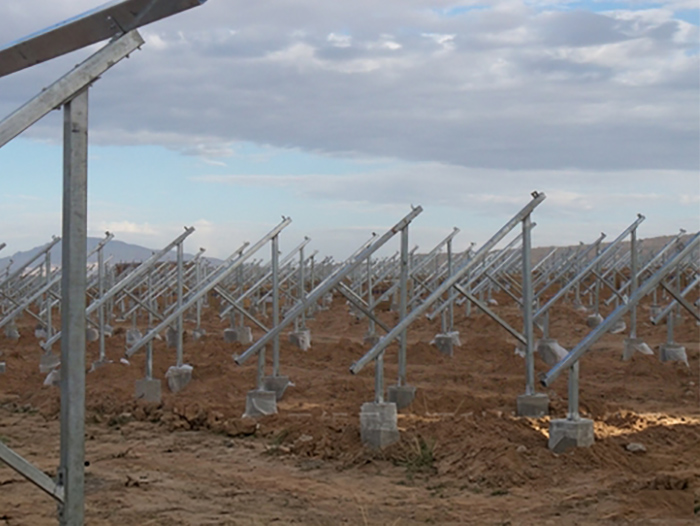
During the 25 year design lifecycle of photovoltaic power plants, photovoltaic brackets are considered as core foundational components. The bracket does not directly generate electrical energy, but carries all photovoltaic modules. The structural strength, anti-corrosion performance, and accessory quality of the bracket directly determine whether the entire power station can generate electricity safely and stably in the long term. If there are shortcomings in the selection, process, and accessories of the bracket, problems such as component corrosion, deformation, collapse, and grounding failure may occur, resulting in loss of power generation and even safety accidents.
Reasonable safety margins in structural design are the first line of defense for stable operation of power plants.
The thickness of hot-dip galvanized steel coating meets the standard, which can effectively isolate air moisture and is suitable for mountainous and inland ground power stations; Aluminum alloy has excellent corrosion resistance and is more suitable for high salt spray environments along the coast.
⚠️ Important reminder: Not only the main beam and crossbeam, but also the complete set of hardware accessories such as bolts, nuts, and grounding screws must have the same anti-corrosion level as the main body of the bracket. The anti-corrosion level of accessories is relatively low, which will preferentially corrode and cause the entire system to fail prematurely; Direct contact between dissimilar metals can also cause electrochemical corrosion, accelerating component damage.
Although the accessories are small, they directly affect the long-term reliability of the entire photovoltaic bracket system.
4、 Reasonable selection and standardized installation to reduce potential hazards in the later stage
Even the best bracket products cannot do without scientific selection and standardized construction.
According to the project scenario selection: mountainous, flat, seaside, the same set of support schemes cannot be directly applied;
Component tilt angle optimization: Reasonable tilt angle balances structural safety and annual power generation;
Strictly tighten the bolts according to the torque specified in the drawings during installation, and ensure proper acceptance of the grounding point during construction;
Regular inspections after completion, with a focus on checking whether fasteners are loose and whether components are corroded.
Summary
Photovoltaic power plants operate stably for a long time, and components and inverters are highly valued. However, photovoltaic brackets, as the underlying foundation, must not be ignored. The four dimensions of mechanical structure, anti-corrosion technology, hardware fasteners, and grounding safety together constitute the reliability of the bracket.
When purchasing photovoltaic bracket projects, it is not enough to only compare unit prices, but also to comprehensively consider design capabilities, raw material quality, and accessory matching levels in order to ensure the stable completion of the 25 year design life of the photovoltaic power station.
If you have any inquiries regarding the selection of ground photovoltaic brackets, please feel free to contact us.
製品や価格表に関するお問い合わせは、24時間以内にご連絡いたします。
 RM502, Sihai Smart Zone, No.189, Fanghu West Road, Huli District, Xiamen, Fujian, China.



© 著作権: 2026 Xiamen Wintop New Energy Tech Co., Ltd.. 全著作権所有.

サポートされているIPv6ネットワーク